How sportsbooks make money (and why we devig)
The fee inside the odds, overround, and proportional devigging.
Fourth & Value · Learn
Evergreen fundamentals: how sportsbooks set prices, what a bet really costs, and how to compare an opinion with the market. For dated game analysis, see the Blog.
Three reads, in order. Together they cover the core idea behind everything on this site: the price matters as much as the pick.
What the vig is, why −110 on both sides adds up to 104.76%, and how to strip it out to get fair probabilities.
Take the best price on each side across books and a 4.5% hold drops to about 3%. How to calculate it, and when it goes negative.
A model disagreement shrank to almost nothing, while the same bet paid at one book and lost at another.
Concepts that don't expire with a game. Examples may come from a past slate; the idea still applies.
The fee inside the odds, overround, and proportional devigging.
Best price on each side, fair odds from the whole market, arbitrage and its catches.
Why we shrink model projections toward the market, and why line shopping can matter more than the pick.
Timing, softer early numbers, and the optionality of betting before the market settles.
When one book's related props contradict each other, and how to decide which side benefits.
How much location moves offensive efficiency, and how a model can account for it.
Calculators that run in your browser. Nothing you enter is sent anywhere.
Enter each book's price on both sides of the same line. See every book's hold, the best price per side, the synthetic hold, consensus fair odds and the stake split when a market goes negative.
Short narrated explainers, about two minutes each.
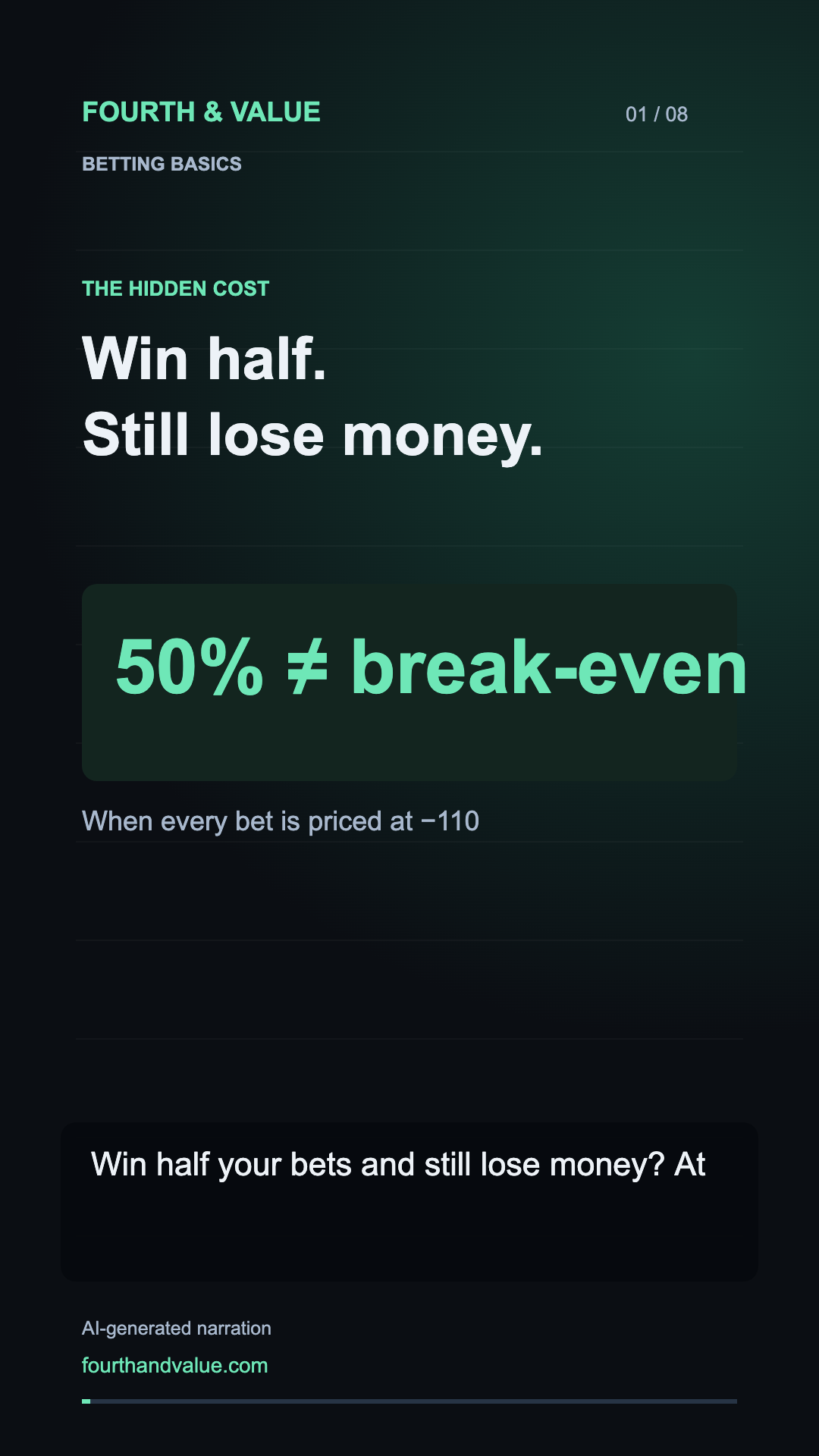
The break-even point at −110, overround, and devigging.
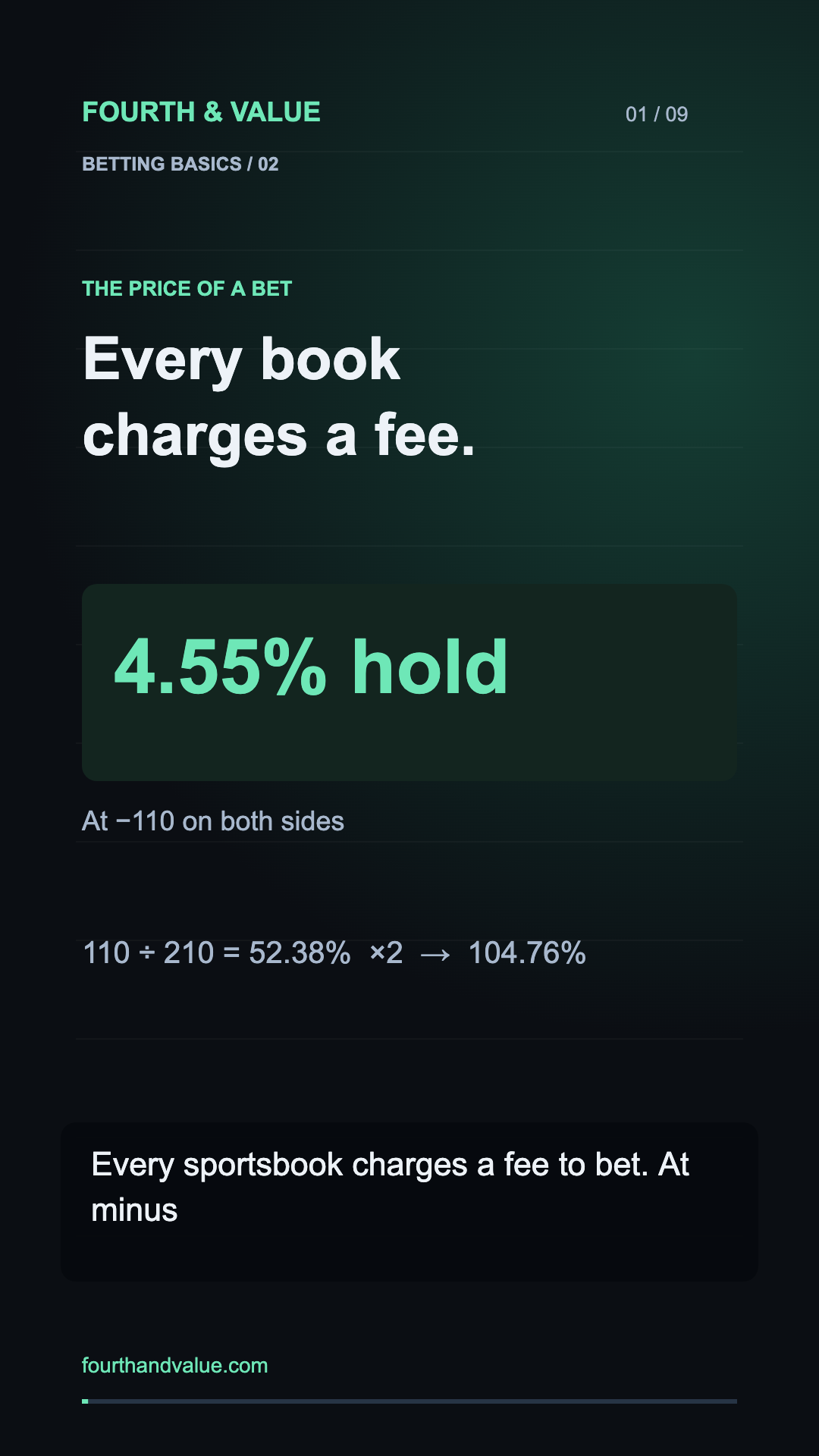
Building the best market across books, fair odds, and why a negative hold is rarely free money.